
 English
 Spain
Spain
![Valley of the Kings [Complete Guide to History, Treasures, and Visits]](https://egyptselecttours.com/storage/5151/conversions/pexels-photo-18934672-webp.webp "Valley of the Kings [Complete Guide to History, Treasures, and Visits]")
Valley of the Kings [Complete Guide to History, Treasures, and Visits]
The Valley of the Kings stands as a window into ancient Egypt’s powerful past. For centuries, it has guarded the tombs of pharaohs and treasures that reveal stories from thousands of years ago. Its walls hold secrets of art, culture, and rituals that shaped one of history’s greatest civilizations.
Visitors today come to explore this unique site, drawn by its mix of mystery and history. Every step through the valley uncovers a piece of the ancient world, offering a rare glimpse into lives that shaped the Nile’s legacy. This guide will walk you through why the Valley of the Kings remains one of archaeology’s most captivating discoveries.
The Dawn of the Valley of the Kings
The Valley of the Kings was not just chosen randomly. Its story begins with practical needs and the desire for protection. This hidden desert valley became the perfect spot for royal tombs, shifting away from old traditions. What made this location so important and why did the pharaohs decide to bury their treasures here? Let’s explore the origins of this famous site.
Geographical Setting and Location
Nestled just west of Luxor, the Valley of the Kings lies in a harsh desert zone surrounded by rugged cliffs and rocky hills. This remote setting wasn’t picked by chance. The valley’s dry climate and natural isolation helped keep tombs safe from the elements and from curious eyes.
The geography played a big role in how tombs were built. Instead of towering pyramids, tombs were cut deep into the limestone hillsides. This underground design offered better protection against floods, wind, and sandstorms. It also made it harder for thieves to find and loot the treasures inside. The rough terrain created a natural barrier, adding a layer of security to the final resting places of Egypt’s rulers.
Visitors today can still see how the valley’s layout provided both secrecy and shelter—two key factors that preserved its secrets for thousands of years.

Historical Background and Purpose
The Valley of the Kings rose to fame during Egypt’s New Kingdom period, which lasted from about 1550 to 1070 BCE. This era was marked by strong pharaohs who expanded Egypt’s power and wealth. Instead of sticking with the old style of giant pyramids, rulers decided to hide their tombs in this valley—far from the familiar Nile floodplains.
This shift had a clear goal: protection. Pyramid tombs were highly visible and became common targets for grave robbers. By moving underground, the pharaohs hoped to keep their burial places secret and secure. Inside the valley, tombs were carved deep, often with complex corridors and chambers designed to confuse intruders.
This move also reflected changes in religious beliefs. The New Kingdom pharaohs believed the afterlife journey was dangerous. A hidden tomb was more than a burial site—it was a fortress for the king’s soul, built to protect him as he traveled to the afterworld.
The Valley of the Kings quickly became home to over 60 royal tombs. Each one was tailored to the needs and status of its owner, combining artistry, magic, and lasting security. The very choice of the valley shows how ancient Egyptians balanced power, spirituality, and practical concerns in their most sacred projects.
Treasures and Tombs Unearthed
The Valley of the Kings is not just a place of silent stones; it’s where history burst forth in stunning discoveries. These tombs hold more than just the remains of kings—they guard treasures, stories, and art that made the ancient world come alive again. Let’s explore some of the most famous finds and what they reveal about Egypt’s royal past.
King Tutankhamun’s Tomb
In 1922, the world stopped when Howard Carter uncovered the tomb of King Tutankhamun, a discovery that still echoes today. Unlike many robbed graves, Tut’s tomb was almost untouched. Inside, thousands of objects shimmered with gold and gems, including the now-iconic golden mask that has become a symbol of ancient Egypt itself.
This find changed Egyptology. It gave scientists and historians a clear view into burial customs and royal life. Beyond academics, it sparked lasting fascination in popular culture—from movies to museums worldwide. King Tutankhamun’s tomb proved the Valley held more than relics; it held magic and mystery sparkling through millennia.
Notable Tombs and Their Inhabitants
The Valley doesn’t stop at King Tut. It houses some of Egypt’s greatest rulers, each with their own marks:
- Ramses II’s Tomb: Often called Ramses the Great, his tomb is vast and richly decorated. His reign was long and powerful, and the tomb’s elaborate carvings celebrate his victories and divine status.
- Seti I’s Tomb: Known for its detailed paintings and advanced artistry, Seti I’s burial site is a masterpiece of color and design. It showcases scenes from Egyptian mythology with clarity and passion.
- Thutmose III’s Tomb: This ruler was a great military leader, and his tomb reflects his strength with numerous inscriptions. It’s a blend of warrior pride and spiritual protection for the afterlife.
Each of these tombs tells a different tale about Egypt’s kings—how they ruled, what they valued, and how they faced death.
Artifacts and Wall Paintings
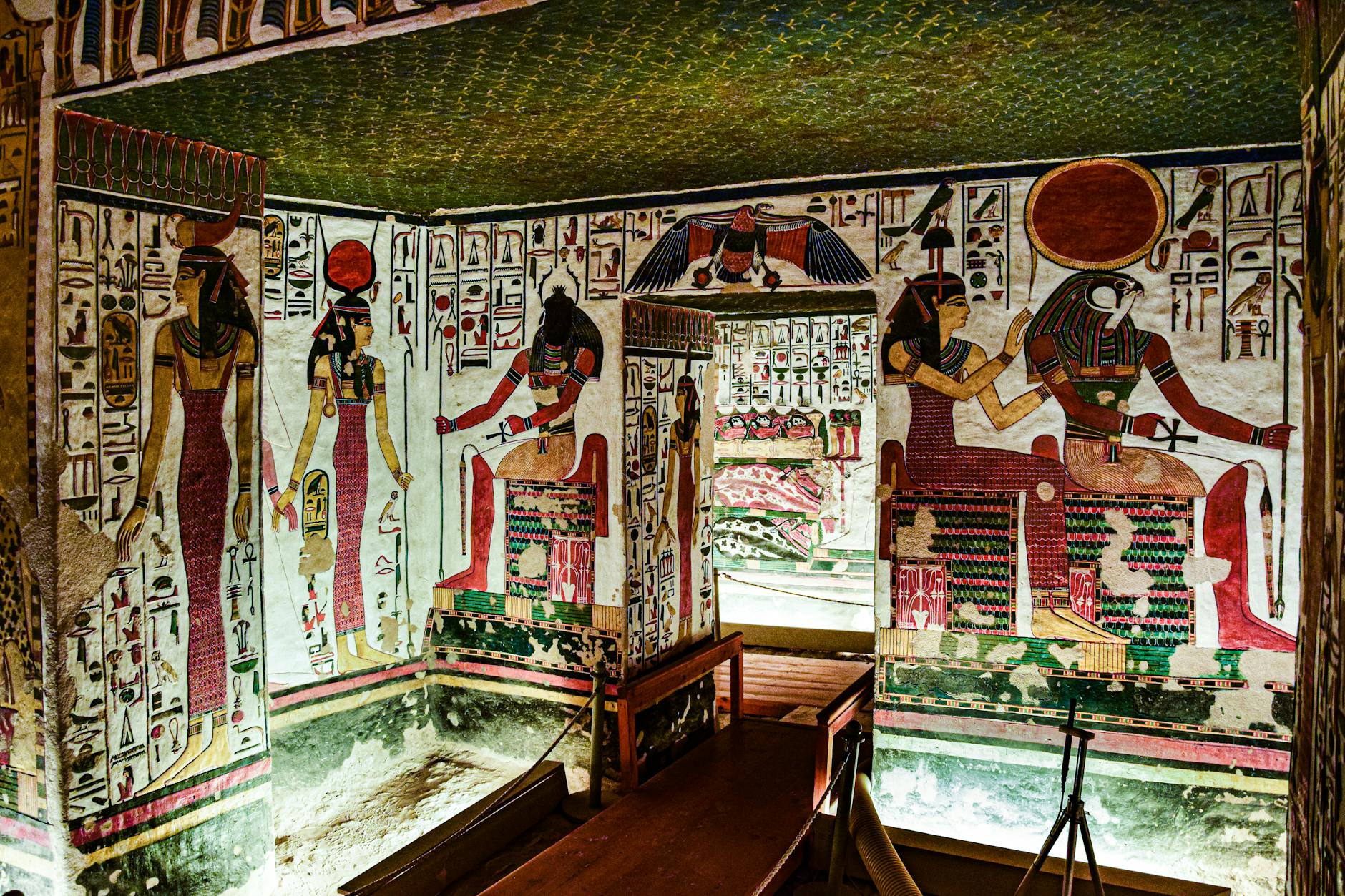
Walking through the Valley’s tombs feels like stepping inside a time machine painted in brilliant hues. The walls burst with scenes of gods, nature, and the pharaohs’ journeys beyond death. These paintings aren’t just decoration; they explain beliefs about the afterlife and the power of rituals that helped guide the soul.
The burial goods are just as vivid. Jewelry, chariots, furniture, and even food were placed carefully to serve the pharaoh in the next world. These artifacts paint a clear picture of daily life and the hope for eternal comfort. They show that the afterlife wasn’t just a dream but a carefully prepared reality, supported by wealth and faith.
Archaeological Exploration and Challenges
The Valley of the Kings has long drawn explorers eager to unlock its secrets. From early accidental discoveries to modern scientific efforts, uncovering this site has been a mix of thrilling breakthroughs and tough obstacles. Protecting what remains is just as challenging as digging it up. Let’s look at how exploration unfolded and the hurdles archaeologists face today.
Early Discoveries and Efforts
The first encounters with the tombs in the Valley of the Kings were often accidental. Ancient locals sometimes stumbled upon hidden entrances centuries ago. In the 18th and 19th centuries, explorers and treasure hunters began serious searches for the royal graves. These early efforts were a mix of luck and persistence.
- Giovanni Belzoni, a showman and explorer, made headlines after finding several tombs in the early 1800s. However, his methods were destructive by today’s standards.
- Tombs were sometimes uncovered by locals digging for stone or treasure, leading to chaotic and unrecorded excavations.
- Slowly, scholars and archaeologists began to document finds more carefully, marking a shift toward scientific study.
Despite limited tools and knowledge, these early explorers revealed much of the Valley’s layout and some important tombs. Their work laid the foundation for more systematic archaeology.
Modern Archaeological Techniques
Today, archaeologists use advanced technology to explore the Valley of the Kings with greater care and precision. Gone are the days of rough digging and guesswork. Modern methods protect fragile sites while uncovering new details:
- 3D scanning maps the tombs inside out, creating detailed models without touching delicate walls.
- Remote sensing tools, such as ground-penetrating radar, detect hidden chambers before excavation begins.
- Digital imaging enhances faded paintings, revealing colors and symbols unseen by the naked eye.
- Preservation teams employ climate control and carefully manage visitor access to maintain the tombs' condition.
These methods help archaeologists study the Valley with respect for its history and fragile state, giving us a clearer picture without harm.
Threats to the Valley’s Preservation
Despite careful research, the Valley of the Kings faces serious threats that put its tombs and treasures at risk. Environmental factors and human activity combine to challenge preservation efforts.
- Humidity and temperature changes damage wall paintings and fragile artifacts. Even small shifts can cause irreversible deterioration.
- Tourism impact means thousands of visitors bring dust, moisture, and wear to tomb entrances every year. Managing access is essential to slow damage.
- Flood rains and erosion occasionally threaten the valley floor, risking tomb protection structures.
- Looting and vandalism, although reduced, remain concerns in some areas, putting priceless history in danger.
Preserving the Valley is an ongoing task that requires balancing access, study, and protection. Archaeologists work alongside conservation experts to ensure this ancient site stands for generations to come.
Visiting the Valley of the Kings Today
Visiting the Valley of the Kings today offers a unique chance to step into history and experience the resting place of Egypt’s most famous pharaohs. The site still holds the quiet power of ancient secrets, but it’s also a well-organized destination for travelers who want a meaningful encounter with the past. Knowing when to go, where to explore, and how to behave helps you make the most of this incredible place while respecting its fragile beauty.
How to Get There and Best Time to Visit
The Valley of the Kings lies about 30 minutes from Luxor, making the city the easiest base for your visit. You can get there by taxi or join a guided tour that includes transport and knowledgeable guides. For those who prefer independence, car rentals or motorbikes are also popular options.
Timing your visit is key to having a comfortable experience. The best months are from October to April, when the weather is cooler and more pleasant. Summers in the valley often soar above 100°F (38°C), which can make exploring exhausting. Early mornings are especially nice because crowds are smaller and the light is perfect for photos outside the tombs.
Weekdays generally see fewer tourists than weekends or holidays, so planning a visit midweek helps avoid busy times. Also, try to arrive right when the site opens to enjoy quieter corridors and more space to absorb the atmosphere.

Must-See Tombs and Highlights
The Valley has over 60 tombs, but only a select few open to the public at a time to preserve their fragile interiors. Don’t miss these standouts for a visit rich in history and awe:
- Tutankhamun’s Tomb (KV62): Famous worldwide and loaded with vivid wall paintings. Look for scenes of the young king’s journey through the afterlife and details in the narrow burial chamber.
- Ramses III’s Tomb (KV11): Known for dramatic colors and powerful imagery of the king battling enemies. The long corridors and deep chambers give a feel of ancient royal protection.
- Seti I’s Tomb (KV17): Often called the most beautifully decorated tomb, it features intricate reliefs and rare scenes from Egyptian mythology with rich color layers.
- Thutmose III’s Tomb (KV34): This tomb stands out for its unique layout and paintings that feel like a spiritual roadmap for the warrior king’s soul.
When inside, take your time to witness the fine details: the painted gods, hieroglyphic spells, and symbolic scenes. These walls speak volumes about how the ancient Egyptians viewed death and rebirth. A flashlight is not allowed, but natural lighting is carefully managed, so patience helps you catch every colorful edge and carved figure.
Visitor Guidelines and Respectful Behavior
The Valley of the Kings is a priceless archaeological treasure that needs careful protection. Rules are in place to keep the tombs intact for future generations and to honor the sacred nature of the site:
- No photography inside tombs. Flash and camera light can damage ancient pigments. Outside the tombs, photos are allowed, so save your shots for those areas.
- Stay on marked paths. Don’t touch walls or artifacts. Oils from hands can cause harm.
- Keep noise low. Respect the quiet atmosphere to allow everyone to reflect on the history.
- Follow staff instructions. Guides and guards are there to help preserve the site and keep visitors safe.
- Carry water and dress comfortably but modestly. The sun can be strong, and there’s little shade.
By following these guidelines, you take part in protecting a world heritage site. Visiting responsibly also deepens your connection to the place, letting history feel alive without harming it.
Visiting the Valley of the Kings today is more than sightseeing—it’s an opportunity to walk through time with respect and wonder. With careful planning and the right mindset, your journey will be one to remember.
Legacy and Cultural Impact of the Valley of the Kings
The Valley of the Kings is more than a burial ground—it’s a wellspring of knowledge and inspiration that still shapes how we understand ancient Egypt. Its discoveries have rewritten history books and sparked endless fascination across the world. From shaping academic study to lighting up big screens and museum halls, the Valley’s influence stretches far beyond its sandstone cliffs.
Influence on Egyptology and Archaeology
The Valley of the Kings pushed Egyptology forward like no other site. Before its thorough exploration, much of ancient Egypt’s royal life and burial customs were guesswork. The discovery of nearly intact tombs revealed firsthand how the pharaohs prepared for the afterlife, the meaning behind rituals, and even gave clues about everyday life thousands of years ago.
Archaeologists gained priceless insights from the Valley’s riches:
- Burial practices: The complex tomb structures, filled with hieroglyphic spells and artwork, showed a new depth of religious belief and funerary art.
- Language and writing: Detailed inscriptions helped unlock the mysteries of hieroglyphs, revealing historical events and mythologies.
- Art and craft: The fine workmanship in jewelry, furniture, and wall paintings expanded understanding of ancient Egyptian skills and aesthetics.
- Historical timeline: Tombs linked different reigns and helped clarify Egypt’s dynastic history with concrete evidence.
This knowledge shaped modern archaeology techniques, focusing on careful excavation and preservation. The finds in the Valley continue to inspire new research, proving it’s a never-ending source of discovery.
The Valley of the Kings in Popular Culture
The Valley’s treasures didn’t just fill museums—they took center stage in global culture. The excitement sparked by finds like King Tutankhamun’s tomb turned ancient Egypt into a fascination for people everywhere.
Movies, books, and exhibitions have brought the Valley to life with vivid storytelling and stunning visuals:
- Hollywood films such as “The Mummy” series popularized the mystery and adventure of tomb exploration, mixing fact with thrilling fiction.
- Documentaries and books keep digging into real stories behind the tombs, helping audiences understand what the find means.
- Museum exhibitions worldwide display artifacts from the Valley, allowing millions to witness the beauty and power of Egypt’s past up close.
- Art and fashion inspired by Egyptian motifs, often drawn from the Valley’s treasures, appear in everything from jewelry to graphic design.
This ongoing popularity shows how the Valley of the Kings isn’t frozen in history—it lives on as a source of wonder, entertainment, and education.

The Valley of the Kings has done more than preserve royal tombs. It changed the way we see Egypt’s ancient civilization by opening a door into a world once lost to time. It feeds scholarly pursuit and fuels creativity, balancing detailed study with a spark of imagination. This mix keeps the Valley alive in minds and hearts worldwide, making it a cornerstone of both history and culture.
Conclusion
The Valley of the Kings stands as a true treasure of history and culture. Its hidden tombs reveal stories about powerful rulers, rich beliefs, and the care ancient Egyptians took to honor life beyond death. Visiting the valley offers a chance to connect with a world that shaped much of our past.
By protecting and exploring this unique site, we keep its legacy alive for future generations. Plan a visit or follow its discoveries to witness a place where history stays vivid and inspiring. The Valley of the Kings invites everyone to step closer to the past and feel the weight of ancient mysteries firsthand. Thank you for joining this journey—may the valley’s stories stay with you long after your visit.